Taiwan - Rubble mound method to mitigate coastal erosion
Adaptation Framework : Promote implementation
Adaptation Option : Structural
Issue : Human interference, coastal erosion
Core Content : Environmental restoration
Case Characteristics : practical operation
Scale : City/County
Author : Liang Tingyu
View : 4389
Issues and Objectives
The sand on the beach at Toucheng Beach is periodically carried away from the coast and replenished every year with the seasonal changes in ocean currents. The erosion and deposition maintain a dynamic balance. However, this balance was disrupted by the breakwater effect after the construction of Wushi Port[1]. Sand accumulated on the north bank of Wushi Port, while the coastline of Dakeng Coast on the south side was gradually eroded and retreated. The original beach width was about 200 meters, but now it is only about 20 meters. Whenever the tide rises, the seawater almost submerges the beach.
[1] Breakwater effect: Man-made structures such as seawalls and breakwaters protrude to the seaside, blocking the original path of coastal currents and drifting sand, resulting in the accumulation of drifting sand on the upstream side (in front of the breakwater) and erosion on the downstream side (behind the breakwater) due to the reduction in sand volume.

Figure 1. Coastline changes at Tai Hang Coast (Source: Water Resources Department e-newsletter (reference website 1); Image editing: NCDR)
Improvement Measures Taken
Since 2015, the First River Management Office of the Water Resources Agency, Ministry of Economic Affairs, has been using a flexible, natural landscaping method—placing large boulders—to beautify the coastal landscape and protect eroded coastlines from the north side of the Zhuan River estuary to Toucheng Beach, with significant results. However, Typhoon Soudelor in 2015 eroded the existing boulders, damaging the coastline and windbreaks. To prevent further deterioration, the First River Management Office carried out two more phases of construction in 2016 and 2017, creating approximately 700 meters of gentle slope using boulders and adding wave-dissipating blocks at the slope to enhance energy dissipation, reduce wave erosion, protect the lives and property of coastal residents, and simultaneously maintain the coastal landscape.
Results
By using the natural method of placing boulders, the coastal landscape can be beautified, and the impact of waves and coastal erosion can be reduced, thus protecting the coastline. The "Dakeng Seawall Environmental Improvement Project" continued at the end of 2015, continuing to use gentle slopes and placing boulders in front of the bathing beach to dissipate energy, achieving the goals of coastal beautification and basic protection. However, the boulders may need reinforcement after typhoon events.
Besides Dakeng in Toucheng Township, Yilan County, many other coastal areas in Taiwan have adopted the method of simultaneously placing boulders and breakwater blocks to improve the coastal landscape while also slowing down erosion. Examples include the Nanbin Coast in Hualien City and the Zhuhu Coast in Changbin Township, Taitung County.
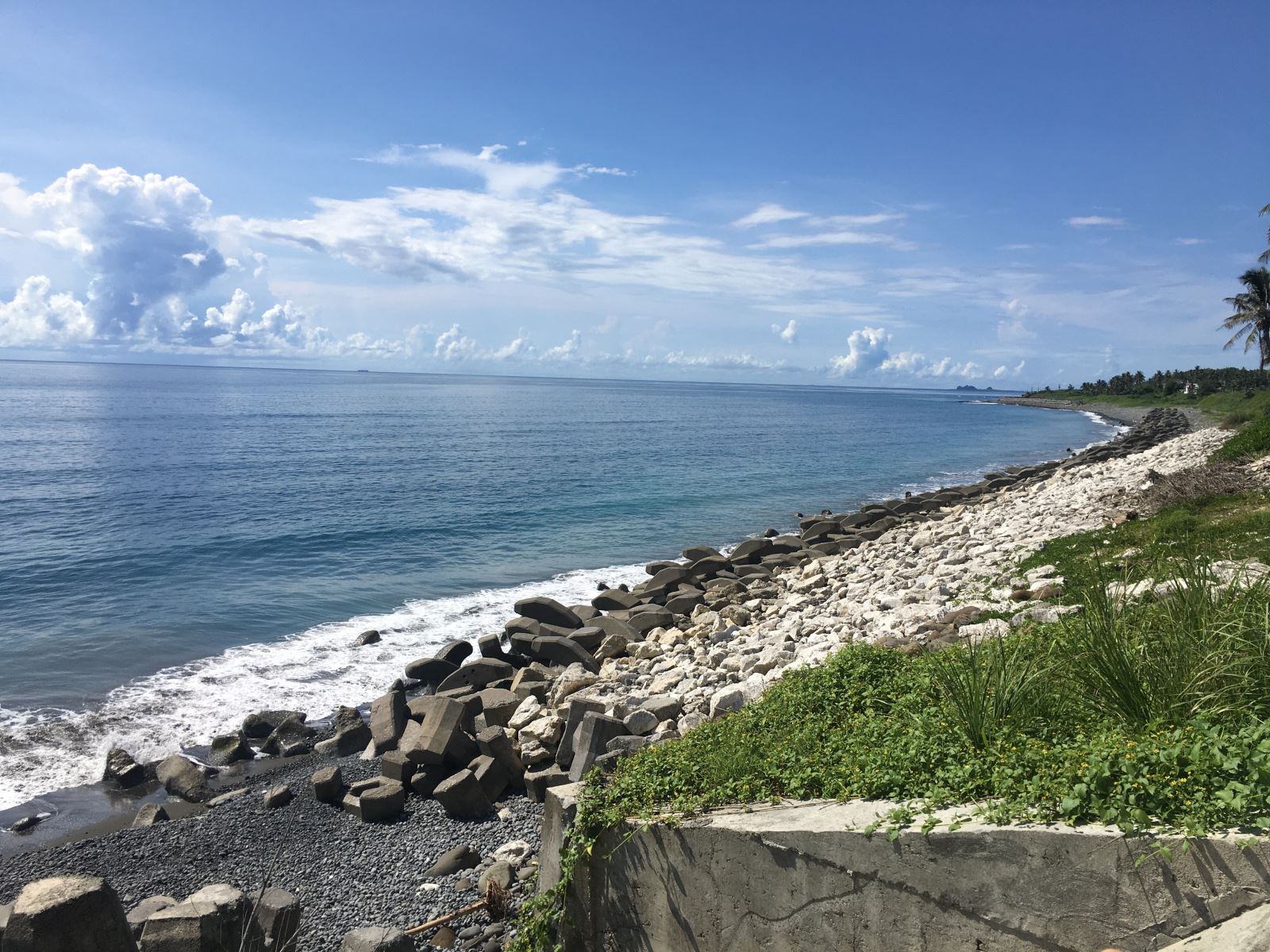
Figure 2. Zhuhu coastline where the riprap method was applied.
References
Water Resources Agency, Ministry of Economic Affairs (2014). Coastal Environment Restoration Project (2015-2020).
Reference Websites
- 一河局吳忠信(2016)。頭城海水浴場海岸保護-拋石消能工法。檢自http://epaper.wra.gov.tw/Article_Detail.aspx?s=1D07FD947A1B9E78 (Apr. 12, 2019)。
- 水利署第一河川局網頁,最新消息內容 (2017-05-12)。檢自https://www.wra01.gov.tw/11346/11352/15620/23061/ (Apr. 12, 2019)。
- 水利署第一河川局網頁,建設成果內容 (2017-12-13)。檢自https://www.wra01.gov.tw/11346/11355/11457/78671/ (Apr. 12, 2019)。