Taiwan - Adjustment of lychee production periods in response to climate change
Adaptation Framework : Promote implementation
Adaptation Option : Structural
Issue : Impacts of low temperatures on crop growth
Core Content : Shifting harvest seasons and redistributing production zones
Case Characteristics : practical operation
Scale : Transnational/National
Author : Liu Yuzhen
View : 3348
Issues and Objectives
Lychee flower bud differentiation requires low-temperature stimulation, but the need for low temperatures varies from variety to variety. The lychee season in Taiwan is concentrated in June, and the yields of superior varieties such as "Yuhebao" and "Nuomici" are unstable, leading to an imbalance between production and sales and excessively high production costs. Furthermore, due to abnormal climate changes in recent years, such as warm winters affecting the development of lychee flower spikes, the lychee yields in 1998 and 2005 were particularly low.
Improvement Measures Taken
Since litchi flower bud differentiation is easily affected by low temperatures, varieties that are easy to flower, such as Yuhebao, are selected. The time for cultivating three new shoots after pruning (Figure 1), stopping the shoot growth, and flower bud differentiation is utilized. Production areas are allocated and production periods are adjusted in accordance with local climate and varieties (Figure 2).
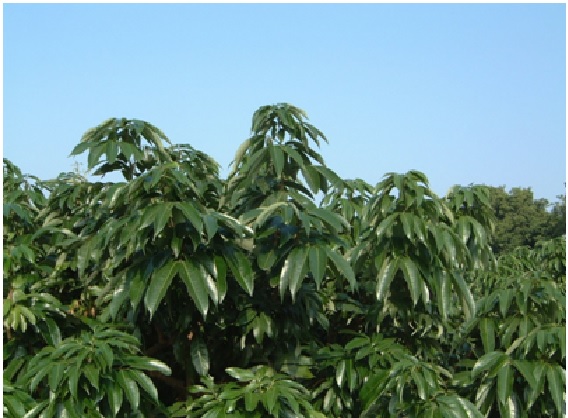
Figure 1. The condition of litchi shoots after pruning (Image source: Reference 1)
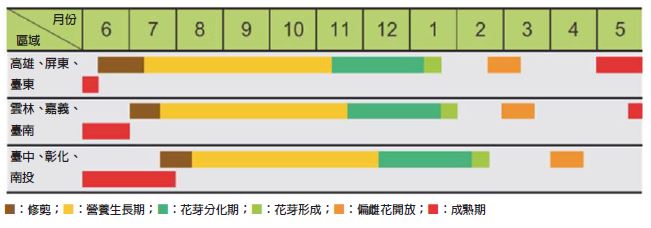
Figure 2. Pruning period and production period of "Yuhebao" lychee in different production areas (Image source: Reference 2)
Results
After successful pruning and production period adjustment, the lychee variety exhibits a high rate of charred kernels, excellent quality, and abundant yield (Figure 3). For example, in areas south of Fangliao in Pingtung and Dawu in Taitung, pruning should be completed before mid-June to concentrate the production period before mid-May. In central Taiwan, pruning in early July is ideal, allowing the production period to be adjusted to after mid-June, thus avoiding conflict with the southern production period. At the latest, it can be extended to after early July, with stable yields and better market adjustment capabilities. Using this method, the production period of Taiwanese lychee can be extended from early May to early July, a period of up to two months.
.JPG)
Figure 3. "Yuhebao" grapes after successful period regulation, exhibiting high charred kernel rate, excellent quality, and abundant yield (Image source: Reference 3).
References
- Deng Yongxing. Lychee Industry Knowledge Base – Lychee Cultivation and Management.
- Zhang Zhewei and Zhang Renyu. A Study on the Adjustment of Litchi Industry Structure and Production Period Regulation. pp. 101-112.
- Deng Yongxing. 2006. How to extend the production period of Taiwan Yuhebao lychee. Agricultural Research Institute Technical Services. 67:5-8.
Reference Websites
- Pruning https://kmweb.coa.gov.tw/subject/ct.asp?xItem=176068&ctNode=5563&mp=274&kpi=0&hashid=
- How to extend the harvest season of Taiwan's Yuhebao lycheehttp://ir.tari.gov.tw:8080/bitstream/345210000/2179/1/journal_jts_67-2.pdf